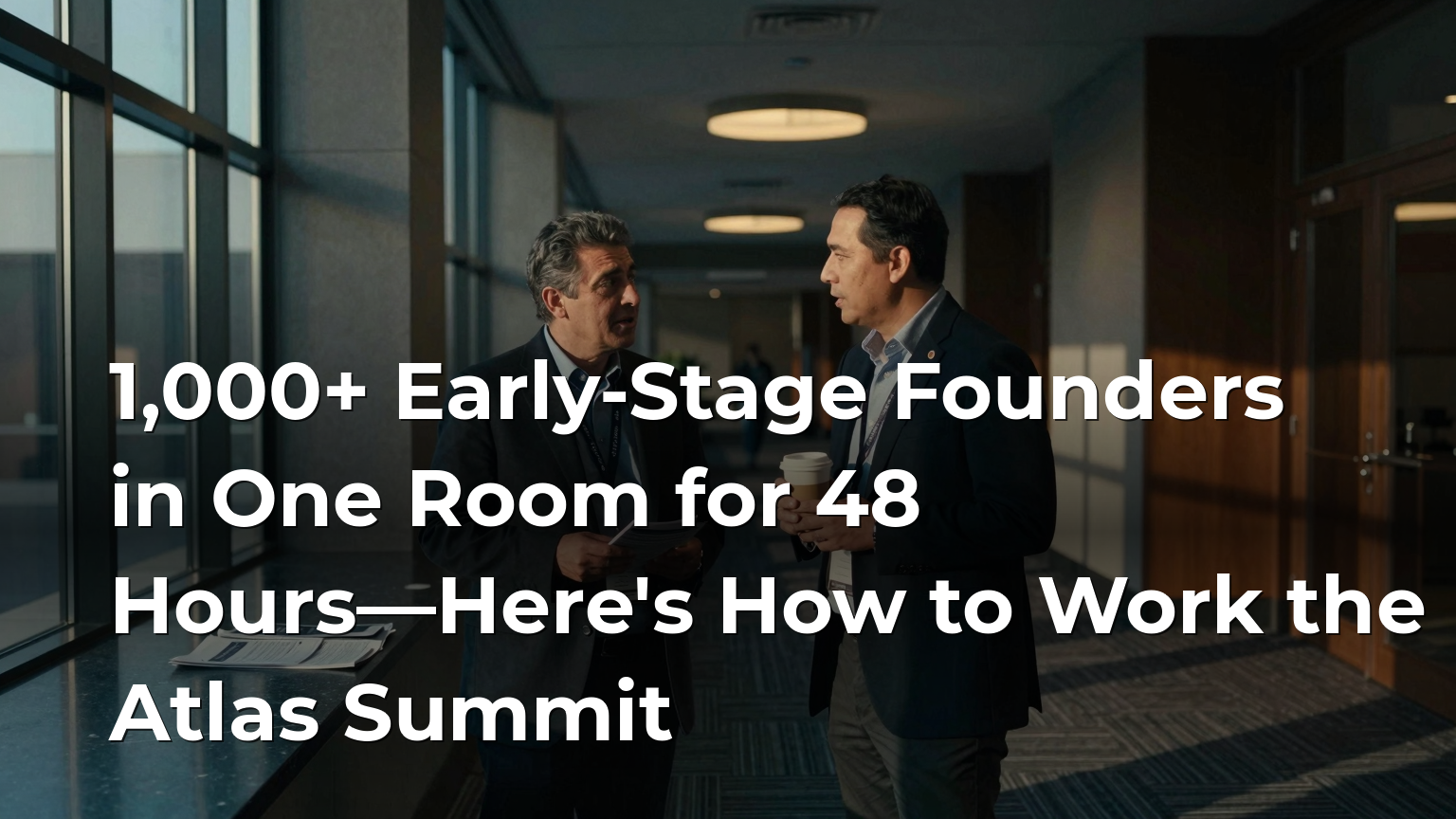
Open Atlas Summit 2026 runs August 21-22 in Milpitas, California, and expects 1,000+ high-skilled immigrant founders and investors in the room. If you sell to early-stage startups, that's a dense concentration of decision-makers you can't replicate with a scraped list. Fifty-plus speakers, tracks on fundraising and visas, and two days of unstructured hallway time.
We wrote about this event when the first attendee numbers landed. The 2026 edition is bigger, and the audience is more specific. Here's what that means for your pipeline.
Immigrant founders are a distinct ICP, not a diversity checkbox
Most outbound advice treats "startup founder" as one buyer. It isn't. Immigrant founders running US companies tend to share a few traits that change how you should approach them.
They're often first-time US operators. That means they're buying infrastructure, compliance, banking, payroll, and legal help for the first time, usually in the same 90-day window. They ask peers for recommendations before they ask Google. And they move fast because visa timelines and runway both push them.
They also tend to be technical. A meaningful share of Open Atlas attendees are engineers or product people who founded after a stint at a large US tech company. Your cold email has to survive a skim from someone who has built things and can smell a template.
If your ICP is "seed to Series A, US-incorporated, technical founder," this conference is a shortcut. If your ICP is enterprise procurement, skip it. The room skews early.
The visa and fundraising tracks are where the buying signals live
Open Atlas runs parallel tracks. Two of them matter for outbound.
Fundraising. Founders in a raise are actively buying. They need pitch deck help, data room tooling, cap table software, legal counsel, and often a fractional CFO. They're also about to have money. A founder who closes a seed round in September is a much better prospect in October than they were in July.
Visas. O-1, EB-1, H-1B transfers, and the founder-specific pathways. Anyone sitting in a visa session is dealing with immigration counsel, sometimes for the first time, and often for a co-founder or key hire too. If you sell to that segment, the session itself is a lead magnet.
We've seen this pattern at other founder-heavy events. The sessions people attend tell you more about their buying stage than their job title does. A founder at a visa panel is not the same buyer as a founder at a growth marketing panel.
How to work the room without being the person everyone avoids
Conference outbound fails for the same reason cold email fails. People lead with what they sell instead of what the other person is dealing with.
Three things that work at founder events:
- Ask what they're building before you say what you do. Founders will talk about their company for ten minutes if you let them. That's not wasted time. It's qualification.
- Pick one problem you solve and stick to it. "We help seed-stage founders with X" beats a menu of five services. The menu signals you don't know who you're for.
- Get the follow-up channel right. LinkedIn is fine. Email is better if you can get it. A WhatsApp number is gold for international founders who live on it.
What doesn't work: badge scanning and a generic "great to meet you" email three days later. Everyone does that. The founders who remember you are the ones who sent something specific within 24 hours.
Pre-event list building beats post-event scrambling
The attendee list won't be public. That's fine. You can still build a target list before August 21.
Start with the speaker roster when it publishes. Fifty-plus speakers means fifty-plus companies, and speakers are usually founders or investors with real budget authority. Then layer in the sponsor list. Sponsors at a founder event are almost always selling to founders, which means they're not your competition, they're your peers, and their logos tell you who else is fishing in this pond.
For the broader attendee pool, work backwards from the community. Open Atlas has a Slack, a newsletter, and a LinkedIn presence. People who engage with those channels in the six weeks before the event are the ones most likely to show up. That's your list.
We covered the mechanics of pulling attendee lists from conference ecosystems in this piece on Australian conferences. The workflow is the same. Find the community, find the signal, build the list.
What we'd actually do with this event
If we were running outbound to seed-stage immigrant founders, here's the play.
Two weeks out, build a list of 200-300 target companies from the speaker roster, sponsor logos, and community engagement. Score them on stage and sector. Draft a short pre-event email that references the summit and asks one specific question about what they're working on. No pitch.
At the event, work the fundraising and visa tracks. Take notes on the back of your phone. Send a follow-up within 24 hours that references something specific from the conversation.
Two weeks after, re-engage anyone who didn't reply the first time. Founders who just came back from a conference are usually in a buying mood. The post-event window is short.
If you want to see how MiraReach handles the list building, inbox scoring, and personalised drafting for an event like this, give MiraReach a try. You still press send. We just make the draft worth sending.
— Mira